
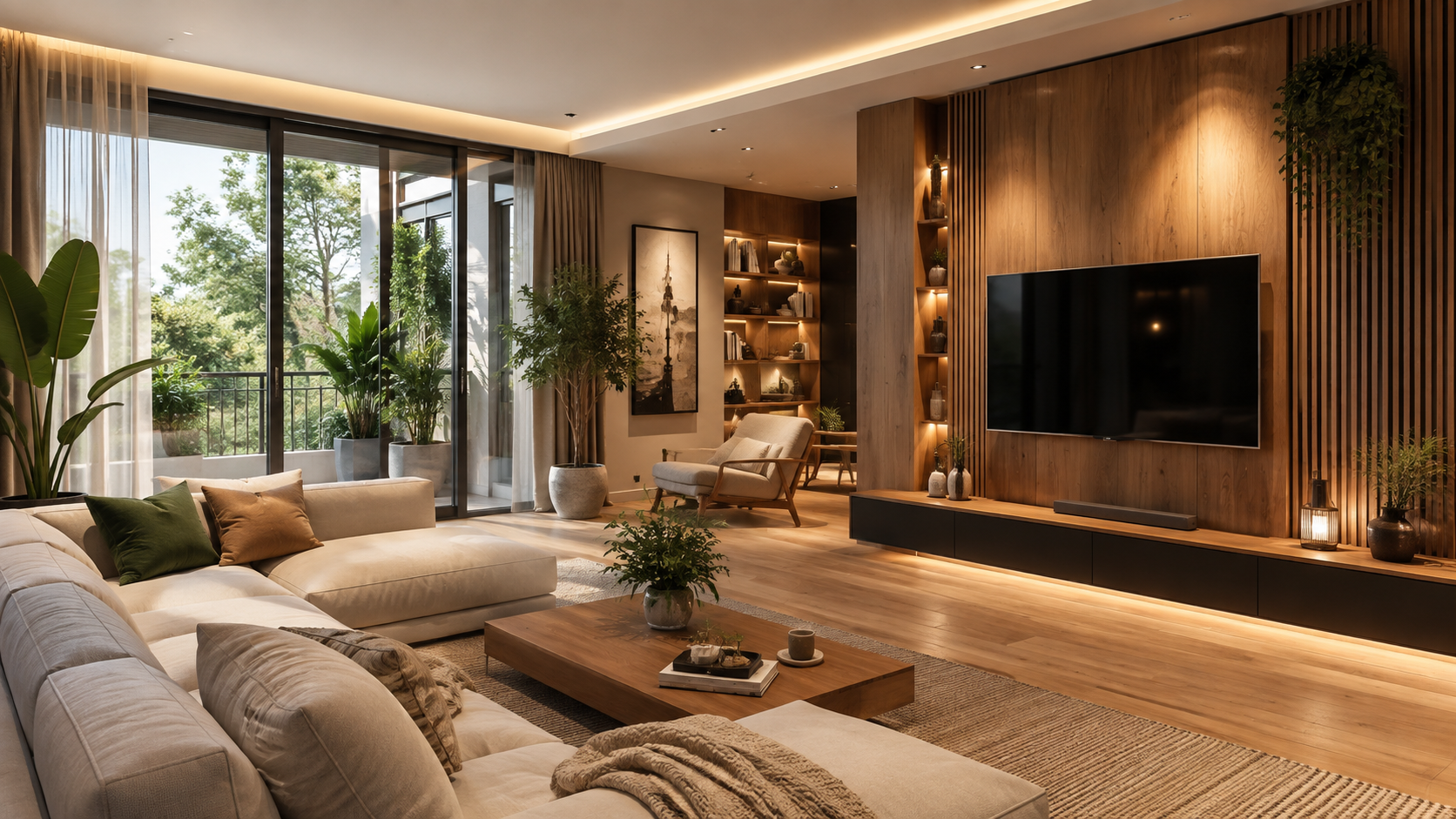
Have you ever rearranged your living room only to feel that the space still lacks functionality or warmth? Most homeowners rely solely on aesthetic inspiration from social media when redecorating. However, top interior designers and spatial data models look at space through a different lens: behavioral patterns, spatial efficiency, and human interaction.
In this guide by DataForest.ir, we explore how smart design principles and data-driven techniques can transform your living space into a balanced, beautiful, and highly functional sanctuary.
1. Master the Traffic Flow Pattern
Before purchasing large furniture pieces, map out your home’s natural walkways. Architectural spatial data indicates that a comfortable walking path requires a clear width of 24 to 36 inches (60 to 90 cm). Obstructing these natural pathways creates visual clutter and restricts movement, subconsciously making your space feel cramped.
2. Apply the Golden 60-30-10 Color Rule
A cohesive interior design rarely happens by chance—it relies on precise visual balance. To achieve harmonious color distribution across any room, follow the classic 60-30-10 formula:
- 60% Dominant Color: Walls, large area rugs, or major built-in elements (usually neutral tones).
- 30% Secondary Color: Main upholstery, curtains, and feature furniture.
- 10% Accent Color: Throw pillows, artwork, decorative objects, and statement lighting.
3. Implement Multi-Layered Lighting
Relying on a single overhead ceiling light is one of the most common interior design mistakes. To create depth and adaptability, structure your lighting plan around three distinct functional layers:
- Ambient Lighting: General illumination that provides overall visibility.
- Task Lighting: Focused light sources for specific activities, such as reading lamps or under-cabinet kitchen LEDs.
- Accent Lighting: Highlight lighting used to showcase architectural features, shelving, or artwork.
4. Integrate Biophilic Design for Well-Being
Blending natural elements—such as solid wood, natural stone, and indoor greenery—into your modern layout does more than enhance visual appeal. Environmental psychology research shows that biophilic design can reduce stress levels and boost overall cognitive focus in living environments by up to 37%.
5. Scale and Proportion over Size
Data shows that improper scale—not lack of square footage—is the primary reason small rooms feel cluttered or large rooms feel empty. Always balance high-profile furniture with low-slung pieces and ensure artwork occupies approximately 60% to 75% of available wall space above a piece of furniture.

Leave a Reply